Flight Training
Learn to Fly
Learn To Fly With Tubreaux!
Tubreaux Aviation is committed to providing the highest quality of Flight Training available anywhere. All of our pilots and flight instructors are professionally trained through various programs such as Louisiana Tech and LeTourneau University. Every instructor has also gone through extensive upset recovery and spin training to ensure our pilots are the safest and most proficient pilots available. Tubreaux Aviation is proud to call ourselves a certified Cirrus Training Center with staff directly trained by the Cirrus headquarters in Duluth.
Getting Started:
Tubreaux offers customized flight training for both full time students and busy working people.
Timing: Typically a private pilots license takes 3-4 weeks for a full time student or 2-3 months if you fly 2-3 days per week
First step: Contact a Tubreaux instructor to schedule a discovery flight and formulate a training schedule that meets your needs.
Training Fleet:
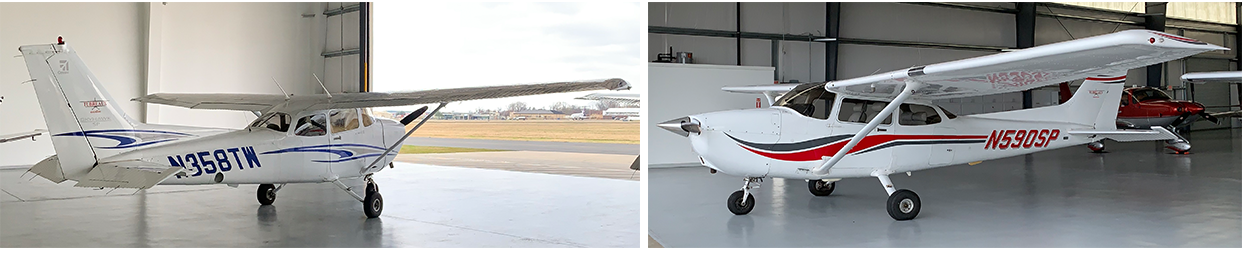
- Two Cessna 172SP's with GNS430W, Garmin G5 & ADSB Weather
- 2004 Cirrus G2 with Avidyne System
- Redbird FMX Full Motion Simulator
Ratings Offered
Training and Ratings Available:
- Private
- Instrument
- Multi Engine
- Commercial
- CFI/CFII
- Complex
- High Performance
- Required Cirrus Insurance Training
- Advanced Avionics Training
- Flight Review (your airplane OR ours)
- Instrument Currency Training (use our simulator and do it for half the cost)
Private Pilot
20 hours of flight training with an instructor, covering:
- 3 hours of cross-country flight training
- 3 hours of night flying (including a cross-country flight & 10 takeoffs/landings)
- 3 hours of instrument training
- 3 hours of flight training within 60 days of checkride
- 10 hours of solo flight time, including:
- 5 hours of solo cross-country flying
- A long cross-country flight (at least 150 NM with full-stop landings at three points)
- 3 takeoffs & landings at a controlled airport
While 40 hours is the legal minimum, most students in the U.S. finish with:
- 60–75 total hours on average
- 45-55 dual hours
- 10-20 solo hours
Instrument
To qualify for an Instrument Rating, the FAA requires a minimum of 40 hours of instrument flight time, including:
- 15 hours of instrument flight training with an instructor
- 50 hours of cross-country flight time as Pilot-in-Command (PIC)
One cross-country flight of at least 250 NM under IFR, including:
- Three different instrument approaches
- Three airports with filed IFR flight plans
While the FAA minimum is 40 instrument hours, most students require 50-60 hours to build proficiency and confidence.
Commercial
To qualify for a Commercial Pilot License, the FAA requires a minimum of 250 flight hours, including:
- 100 hours as Pilot-in-Command (PIC)
- 50 hours of cross-country flight time
- 10 hours of instrument training
- 10 hours of complex or technically advanced aircraft (TAA) training
Two cross-country flights:
- One over 300 nautical miles with landings at three different airports
- One night cross-country of at least 250 nautical miles
- Five hours of night flying and ten night takeoffs/landings
- Three hours of checkride prep with an instructor
- While 250 hours is the FAA minimum, most students build additional hours before reaching commercial proficiency.
Contact Us!
Contact Us
We will get back to you as soon as possible.
Please try again later.